

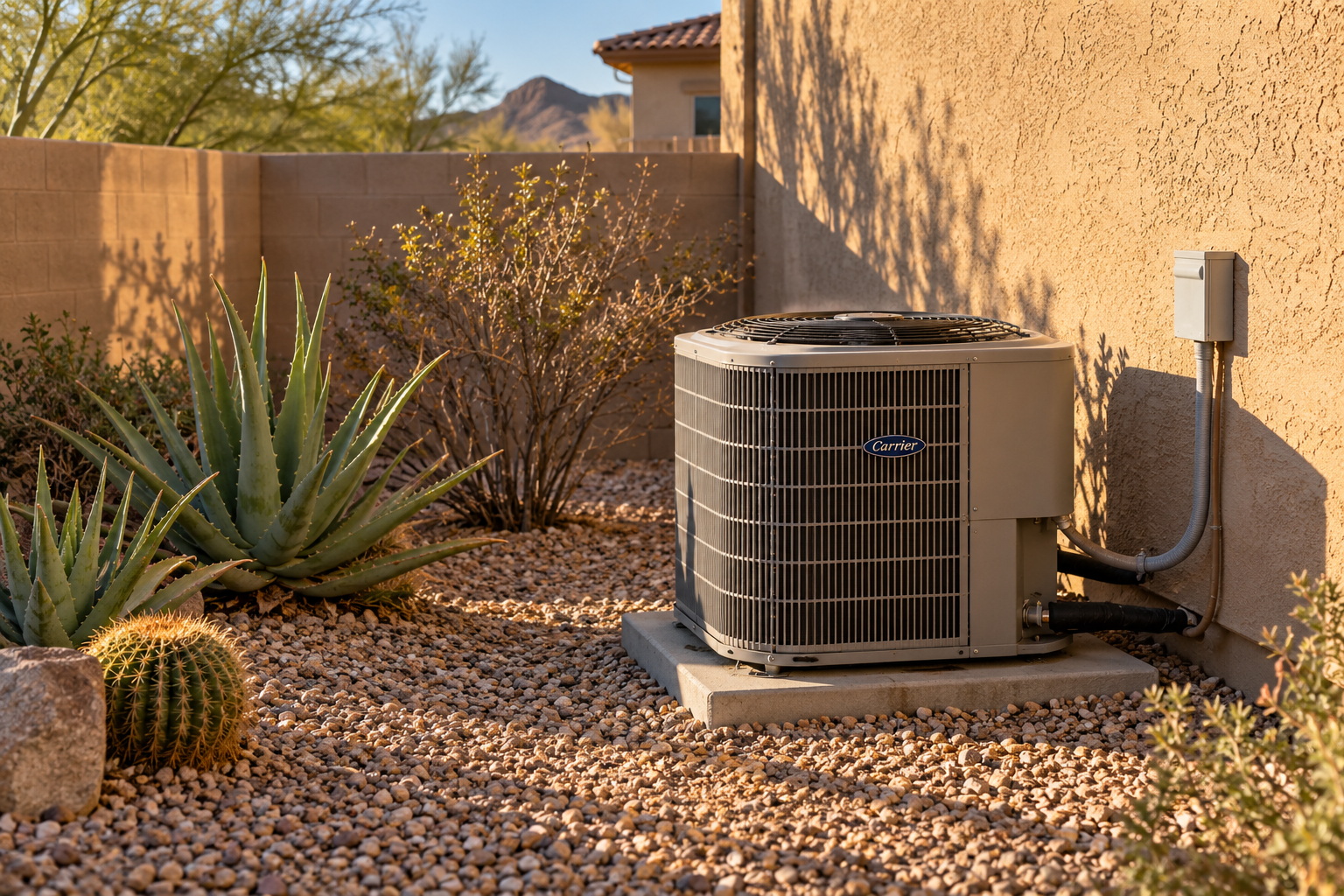
What does it actually cost to own a home in Scottsdale beyond the mortgage payment? The honest answer: quite a bit more than most first-year buyers budget for. Year-round air conditioning in a climate where the National Weather Service treats heat as a serious health hazard, irrigation in the desert, HOA fees, pest prevention, and pool maintenance add up fast. None of it means you shouldn’t buy — it means you should know the numbers before you commit.
The pool looks good. The mountains look good. The equipment pad beside the pool rarely gets its own glamour shot.
Owning a home in Scottsdale means paying attention to the desert conditions around it and the systems that make it comfortable. Heat, drainage and outdoor upkeep deserve a serious place in your budget. None of that makes a particular home a problem. It means the inspection needs to go further than admiring the finishes.
Start with the air conditioning .. even if the kitchen is distracting
In a climate where the National Weather Service treats heat as a serious health hazard, cooling deserves more attention than “it worked when we toured.”
Ask for equipment ages and service records, then have the systems evaluated. Find out which rooms each unit serves. If a room feels different from the rest of the house, ask why rather than accepting a quick explanation about how the thermostat was set.
Request electric bills covering a full year. Ask whether the seller occupied the home throughout that period. You want enough context to build your own budget, not to inherit someone else’s thermostat habits as a financial assumption. For a full breakdown of what you’re walking into, check out the real cost of Scottsdale homeownership.
A dry climate can still send water where you don’t want it
Scottsdale’s stormwater guidance notes that summer storms can produce substantial rainfall over a short period. It also says drainage-facility maintenance is generally the homeowner’s or HOA’s responsibility, including some facilities within easements dedicated to the city. Responsibility needs checking for the specific location.
Translation: the wash or drainage feature near a property is worth understanding before you start rearranging the yard.
Ask where runoff goes, whether the seller has experienced water intrusion and what drainage work has been done. Review flood information with the appropriate professionals and get insurance advice for that address. A dry yard on showing day doesn’t settle the question.
Have the roof inspected, too. Ask the roofer what system is there, what condition it’s in and what maintenance or repairs are due. Don’t let attractive roof tiles substitute for an assessment of the roof assembly beneath them.
Outdoor space comes with jobs
A bigger yard may mean more of the outdoor life you want. It may also mean paying someone to maintain it when you would rather be doing something else.
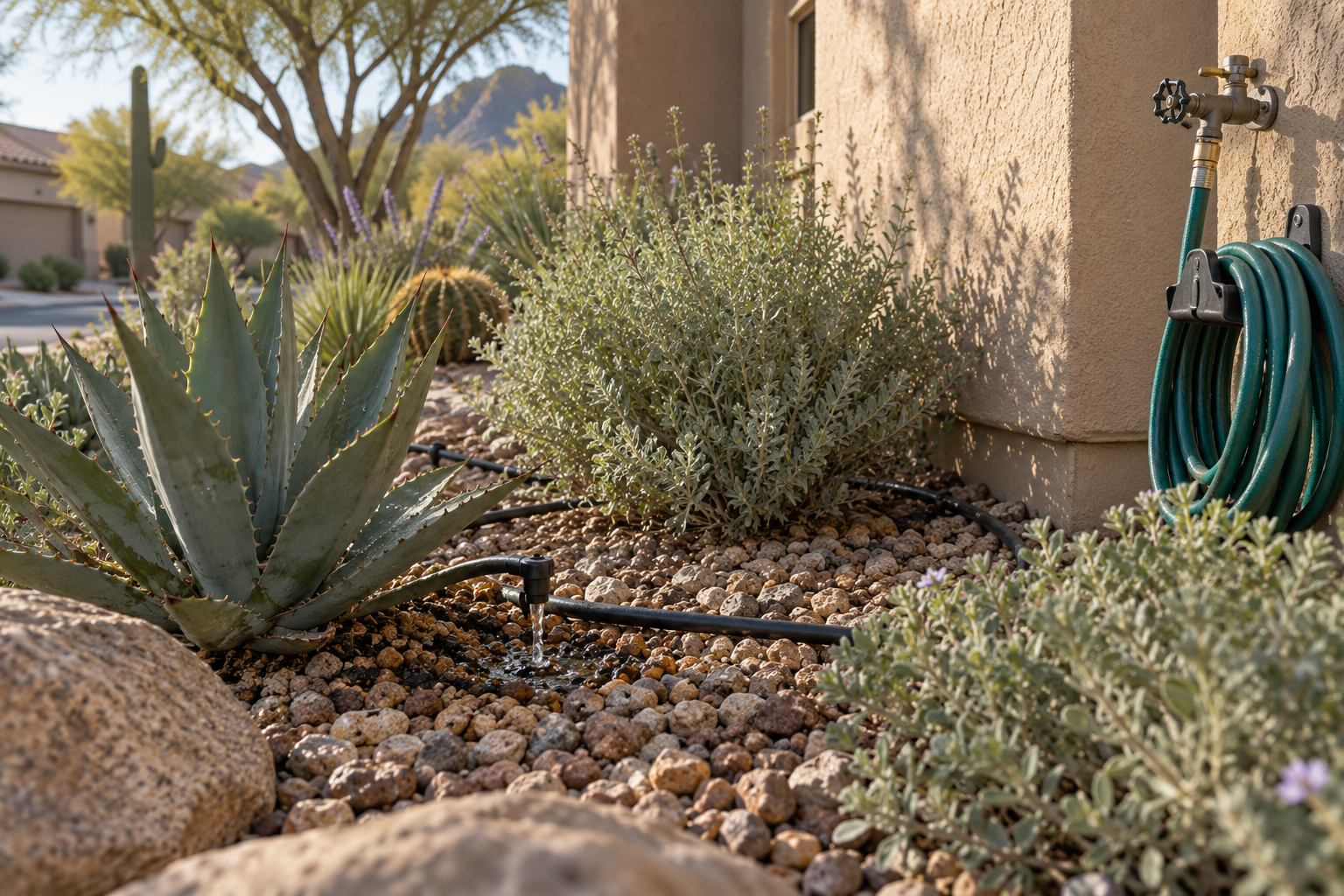
Walk the irrigation system with someone who can assess it. Ask about leaks, controls and the plants’ watering needs. Scottsdale’s water guidance specifically points to efficient irrigation, leak repairs and desert-adapted landscaping as ways to reduce water use.
If there is a pool, get a separate assessment of its equipment, surface and safety features. Ask for service and repair records. The regular cleaning bill won’t tell you whether a pump or heater is nearing replacement. We have a full guide on Scottsdale pool costs that covers this in more detail.
For pests, ask about history and prevention rather than assuming the landscaping predicts the answer. The Arizona Poison and Drug Information Center recommends reducing scorpion shelter around the home and repairing entry gaps. For much more on this topic, read our guide on whether scorpions are really everywhere in Scottsdale.
Find out what you own and what someone else maintains
If there’s an HOA, read the documents and budget. Which repairs are yours? Which require approval? Are there assessments or maintenance obligations you need to understand? Have questions about the documents reviewed by the right professional.
Confirm water service, sewer or septic arrangements and any solar ownership or payment obligations. If you’ll leave the home unoccupied for part of the year, ask your insurer about requirements and decide who will check on it. Don’t assume an app replaces a person when something needs attention.
Use the home-inspection stage to turn findings into actual estimates. Then decide whether the home still fits your time and budget. And if the Scottsdale summer heat has you wondering whether you can handle it, that’s a question worth answering before you buy.
If you found this helpful, add Rebel Group AZ as a preferred source on Google → so our guides show up first in your AI results.
Quick Answers: Scottsdale Homeownership Costs
How much should I budget for AC costs in Scottsdale?
Scottsdale summer cooling costs can run $300–$600 per month during June through September for a typical 2,000 sq ft home, depending on the age of your AC system and thermostat settings. Request a full year of the seller’s electric bills before you close to build a realistic budget. The U.S. Department of Energy notes that ductless mini-splits and newer high-SEER units can cut cooling costs significantly.
Do Scottsdale homes need flood insurance?
Most Scottsdale homes are not in FEMA-designated flood zones, but summer monsoon storms can produce flash flooding in certain areas. Check the specific property against FEMA flood maps and ask the seller about any past water intrusion. The City of Scottsdale notes that drainage maintenance is generally the homeowner’s or HOA’s responsibility.
How much does HOA cost in Scottsdale?
HOA fees in Scottsdale range from roughly $200 to $600+ per month depending on the community. Master-planned communities like DC Ranch and Troon North typically have higher fees that cover landscaping, gates, and amenities. Always review the HOA’s most recent financial statement and reserve study — not just the fee schedule — before buying.
Are scorpions really a problem in Scottsdale homes?
Scorpions are common in new construction areas where desert land was recently graded, but pest prevention is manageable. The Arizona Poison and Drug Information Center recommends sealing entry gaps, removing debris and rock piles near the foundation, and reducing standing water. Routine pest control runs $50–$100 per month in metro Phoenix.
What inspection should I prioritize beyond the general one?
HVAC inspection (especially AC equipment age and efficiency), roof inspection, and a sewer scope are the three most valuable add-ons in Scottsdale. If the home has a pool, a separate pool inspection is worth the investment. The National Association of Realtors recommends specialised inspections for any major system over 10 years old.
Send Farrell the listing and the upkeep you want to avoid. A house should support the way you want to live. Let’s find out whether owning this one would leave you time to enjoy it.