

Thinking about moving to Scottsdale? Here’s what you actually need to know before you start packing — from someone who’s helped dozens of out-of-state buyers make the leap. I’m Farrell Hogenauer, a real estate agent based in Scottsdale, and I work with people moving here from Seattle, Portland, San Francisco, Denver, and pretty much everywhere else. This guide covers the real picture: neighborhoods, costs, schools, weather, and the stuff nobody mentions until you’re already here.
Why People Move to Scottsdale
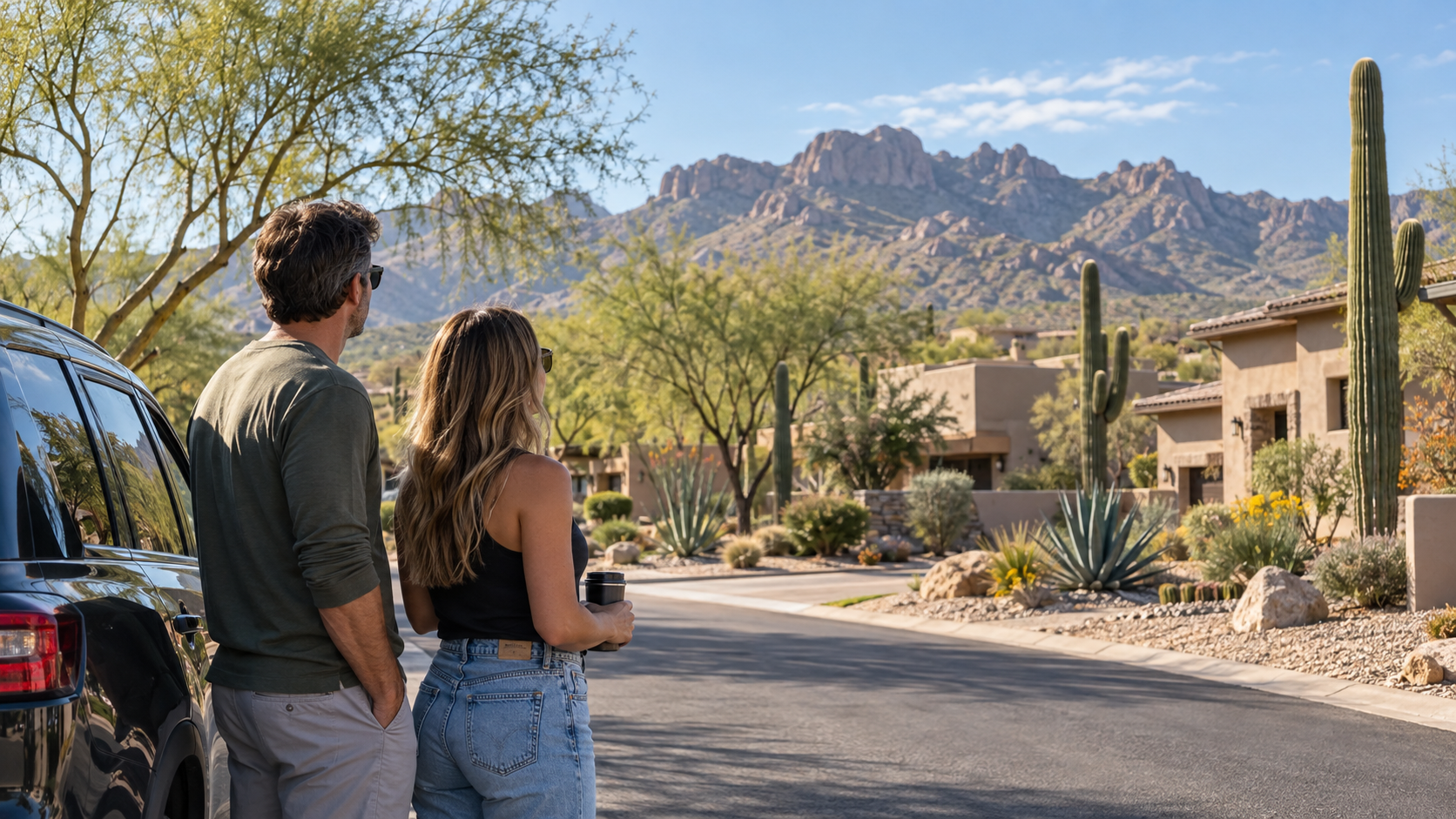
Most of my clients come from the Pacific Northwest and California. The reasons are usually a mix of the same things: weather that doesn’t lock you indoors half the year, a state income tax that actually lets you keep more of what you earn, and a cost of living that — depending where you’re coming from — can feel like a raise. Arizona’s population grew by about 11% between 2020 and 2024, and Maricopa County alone added over 250,000 new residents in that same window (U.S. Census Bureau, 2025). Scottsdale specifically sits at roughly 248,000 people and growing. It’s not a sleepy retirement town anymore — it’s a legitimate city with serious infrastructure, a real job market, and a housing market that reflects it.
Washington State’s new capital gains tax on high earners pushed a lot of my Seattle clients to accelerate their timeline. If you’re coming from a state with state income tax, the switch saves you thousands annually. For Washington residents in particular, check out my breakdown of the Washington millionaire’s tax and what to check before moving to Arizona.
Scottsdale Neighborhoods at a Glance
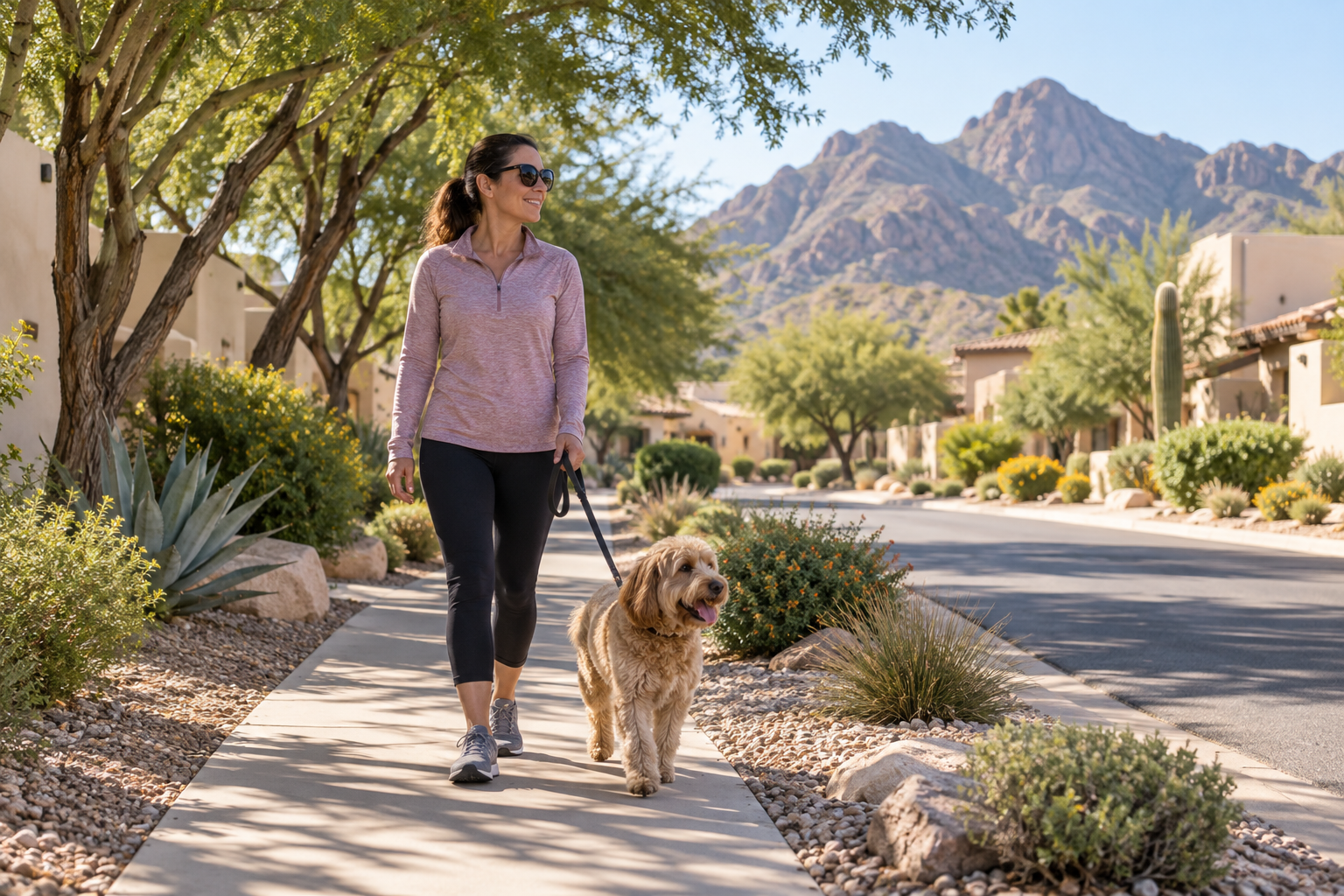
Scottsdale isn’t one place. It’s more like several distinct towns stitched into one city border, and your experience depends entirely on which pocket you land in. Here’s the quick tour:
- Old Town: Condos, lofts, walkable nightlife, weekly art walks. Tight lots, older construction, high walkability. Best for singles and couples who want to be where the action is.
- South Scottsdale: Closer to Tempe and the 101. More affordable entry points — smaller lots, 1960s-1980s ranch homes, solid character if you look past the dated kitchens.
- Central Scottsdale: The resort corridor. McCormick Ranch, Gainey Ranch, and surrounding areas. Golf course communities, established landscaping, higher price tags. This is where a lot of out-of-state buyers land on their first visit because the resorts are here.
- North Scottsdale: Where things open up. North Scottsdale neighborhoods like DC Ranch, Greyhawk, and Desert Ridge feature newer construction (late 90s through present), larger lots, and HOAs with serious standards. This is also where the pricing gets steeper. DC Ranch and Greyhawk are master-planned communities with their own amenity complexes, parks, and school clusters.
- Cave Creek / Carefree corridor: Head northeast and the grid breaks apart. Cave Creek and Carefree are technically different municipalities, but they’re the semi-rural escape from Scottsdale proper — horse properties, acre lots, no HOAs in many areas, and dark skies. If you want elbow room, this is your zone. Also read my comparison of South vs North Scottsdale for more detail.
Cost of Living in Scottsdale
Let’s talk money. Housing is the big line item, but it’s not the only one.
Home prices. In 2025, the median sold price for a single-family home in the broader Scottsdale area was in the mid-to-high six figures, with the market continuing to see demand from out-of-state buyers. Specific medians vary significantly by neighborhood, so I always run current comps before quoting a number. The range is wide. You can find a decent 3-bedroom in South Scottsdale or a condo in Old Town under $600K. A comparable home in North Scottsdale (DC Ranch, Grayhawk) typically falls between $800K and $1.5M. Newer construction near the McDowell Mountain preserve can push past $2M quickly.
Property taxes. Here’s the good news: Arizona’s effective property tax rate averages about 0.62% of assessed value — one of the lowest rates nationwide (Tax Foundation, 2024). For a $1M home in Scottsdale, you’re looking at roughly $5,500-7,000 annually depending on area and school district levies.
Insurance. Homeowner’s insurance in Arizona runs higher than the national average due to monsoon hail and wind risk — budget $1,200-$2,500 per year for a single-family home depending on age and location.
Utilities. Summer cooling costs are real. Expect $250-$500/month electric bills June through September for a typical 2,000-2,500 sq ft home. SRP and APS are the two main providers. Water runs $60-$100/month.
HOA fees. If you’re buying in a planned community — which is most of North Scottsdale and central — you will pay HOA dues. These range from $150/month on the low end to $600+/month for golf-course communities. Read the HOA docs before you buy. I cover more on this in what the photos leave out about Scottsdale homeownership.
Weather & Seasons
I’m not going to tell you the heat isn’t a big deal. It is. But here’s what actually matters about Scottsdale weather.
Summer (June through September) sees daily highs between 100°F and 115°F. The record high in Phoenix is 122°F (National Weather Service, Phoenix Office). July is the hottest month, with an average high around 106°F. The good news: it’s a dry heat — 105°F with 10% humidity is more tolerable than 95°F with 80% humidity in the Midwest. The bad news: you won’t want to be outside between 11 AM and 5 PM for about four months.
Winter is where Scottsdale earns its reputation. November through March, expect highs in the 60s-70s, clear skies, and outdoor dining that’s actually comfortable. This is why snowbirds exist — I cover the seasonal strategy in maximizing snowbird season.
What newcomers don’t expect: the temperature swing between day and night (30+ degrees in dry months), monsoon season (mid-June through September — dust storms, microbursts, occasional flash floods), and that you’ll adjust faster than you think. For the full honest breakdown, read how bad Scottsdale’s summer heat really is.
Best time to move: October through April. You’ll avoid the worst heat during the move, get settled before summer, and actually enjoy your new city right away.
Schools & Education
If you’re moving with kids, schools are probably your top question.
Scottsdale Unified School District (SUSD) serves most of the city with roughly 22,000 students. Some schools rate extremely well — Cherokee Middle School, Chaparral High, Desert Mountain High, and Hopi Elementary have strong GreatSchools ratings in the 8-10 range. Others are more middling. SUSD boundaries can be quirky — check specific boundaries before you shop.
Charters and magnets. BASIS Scottsdale consistently ranks among the top public schools nationally (Arizona State Board of Charter Schools performance data). Other strong options include Great Hearts (Veritas Prep) and Scottsdale Preparatory Academy. Waiting lists for BASIS can be long — apply early.
Private schools. Options include Notre Dame Preparatory, Phoenix Country Day School, and Rancho Solano — tuition ranges from $12K-$28K annually depending on grade.
Arizona’s Department of Education publishes A-F letter grades for every school annually. Cross-reference those with GreatSchools ratings before making a final call.

Buying a Home from Out of State
Most of my clients buy from out of state before they physically move. Here’s what the process looks like when you can’t just drive over on a Sunday.
- Get pre-approved first. Not pre-qualified — pre-approved with a lender licensed in Arizona. A local lender who knows Arizona-specific appraisal trends adds real value.
- Virtual tours are not enough. I send detailed video walkthroughs of every serious candidate — inside, outside, neighborhood streets, nearby amenities. Most out-of-state buyers narrow to 3-5 homes, then I do a live FaceTime tour. For more, see my guide on buying an Arizona home without seeing it in person.
- Inspection is non-negotiable. Arizona homes have issues that PNW and Midwest homes don’t: evaporative cooler vs AC inspection, pool/spa inspection separate, roof condition on tile roofs, and HVAC age.
- Timeline. From pre-approval to closing, plan for 45-60 days. Cash closes faster (14-21 days). I cover the full logistics in my Seattle-to-Scottsdale relocation checklist.
- Be ready to move fast. Good listings in Scottsdale under $1M still go under contract in 5-14 days when priced right.
What Nobody Tells You
I’ve been doing this long enough to know what surprises people after the moving truck leaves.
- HOAs are real here. In North Scottsdale and central, you’re almost certainly in an HOA. They control paint colors, front-yard landscaping, where you park, and whether you can have a basketball hoop. Read the CCRs before closing.
- Pool maintenance is a part-time job or a monthly bill. Pool service runs $80-$150/month for cleaning and chemicals plus pump electricity. In north Scottsdale with a pool and spa, that’s two separate heating systems. Read what a Scottsdale pool actually costs.
- Landscaping isn’t optional desert. HOAs require front-yard maintenance. Drip irrigation emitters clog, lines get chewed by rodents, and desert sun destroys tubing in 2-3 years.
- Scorpions and snakes are real but manageable. Scorpions are common in new construction areas (North Scottsdale, DC Ranch, Greyhawk). Quarterly pest control ($75-$125) plus sealing gaps keeps numbers low. Read are scorpions really everywhere in Scottsdale?
- Water is not the crisis headlines claim. Scottsdale has a 100-year assured water supply designation from the Arizona Department of Water Resources. The Colorado River is in a long-term drought, but Scottsdale has legal priority to its water. I break this down in is Arizona running out of water?
Quick Answers to Common Questions
Is Scottsdale expensive to live in? Yes, compared to the rest of Arizona. The median home price hit $1.18M in 2025. But it’s comparable to or cheaper than desirable suburbs in the PNW and California, especially with no state income tax.
What’s the job market like? Healthcare (Mayo Clinic), financial services, insurance (State Farm), and tech. Many residents commute to Phoenix, Tempe, or Chandler for work.
Do you need a car? Yes. Scottsdale is built for cars. Public transit exists but is limited.
Is Scottsdale safe? Crime rates are significantly below the national average for comparable cities, especially violent crime.
How are the schools? SUSD has excellent pockets. BASIS Scottsdale is nationally ranked. Your specific boundary matters more than district averages.
When should I visit before moving? July or August for the real heat, then January or February for the winter that makes it worth it.
Are scorpions a problem? Nuisance, not danger. Common in new construction. Quarterly pest control keeps them manageable.
Is Arizona running out of water? Scottsdale has a 100-year assured water supply designation. Real Colorado River challenges exist, but the city has legal priority.
Does Arizona have state income tax? No. One of the top reasons people move here.
Do I need an agent? A buyer’s agent costs you nothing directly and handles out-of-state logistics that are hard to manage from 1,500 miles away.