

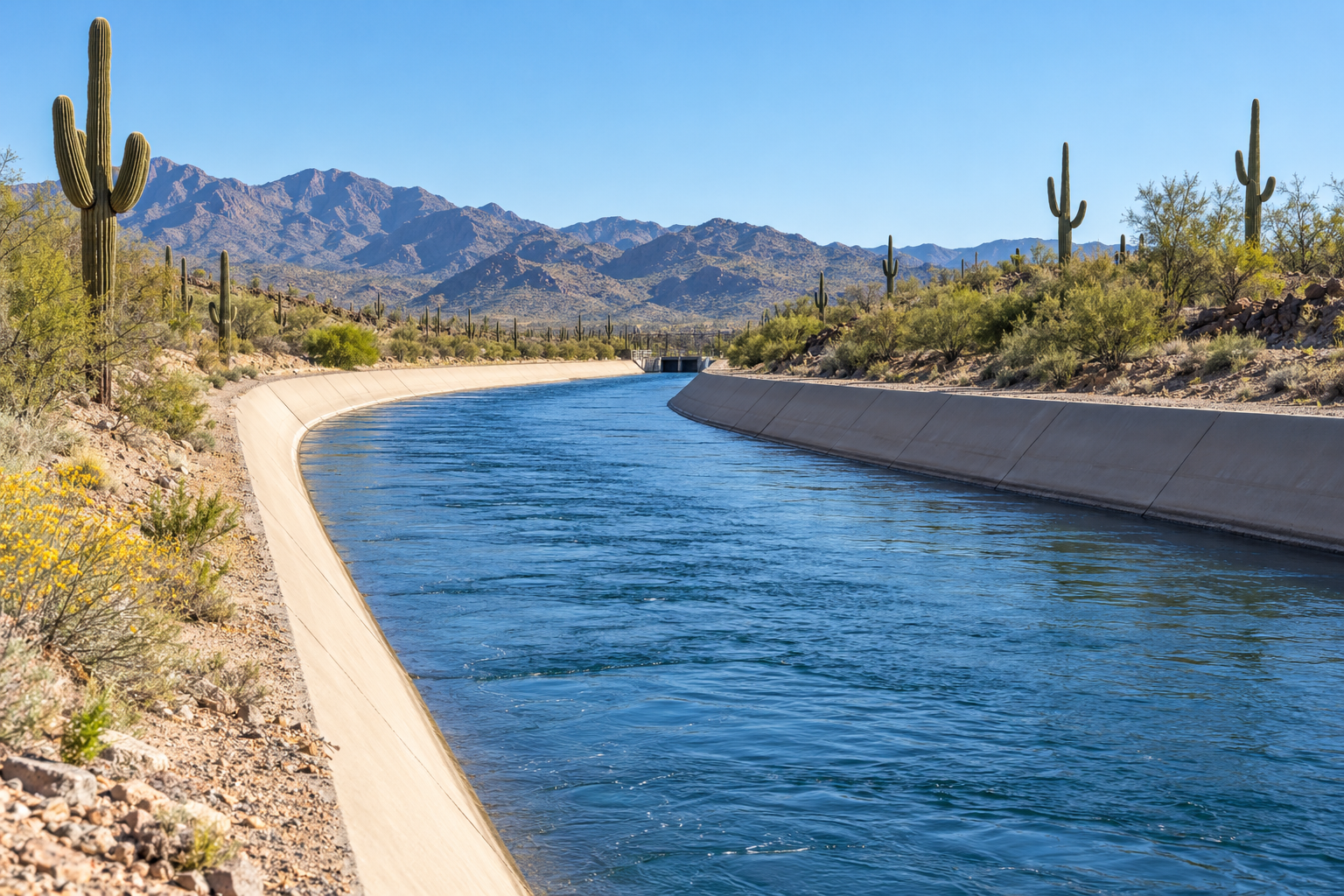
No, Arizona is not running out of water — but whether your specific home has a secure water supply depends entirely on its location, water provider, and property type. The scary headlines about Phoenix going dry describe a real long-term planning challenge, not an imminent tap-shutoff for homes in Scottsdale. What matters for your house hunt is the water arrangement at the address you’re buying, not the state’s 100-year planning rule.
You find a house you love. Then someone sends you an Arizona water headline and suddenly you’re picturing a dry, drippy faucet.
Arizona has real water problems. But doesn’t the rest of the country at times? Here’s the thing, “the whole state is about to run dry” is not a useful description of what you’re buying. Your water provider and the property’s actual water arrangement matter a lot more than a reassuring sentence in a listing.
What the 100-year rule actually means
In Arizona, the Arizona Department of Water Resources (ADWR) created a 100-year water supply program because the state was growing rapidly while relying heavily on groundwater. The goal was to prevent new developments from pumping groundwater faster than it could be replenished. The active and enforced 100 year rule means there is enough legally and physically available water to serve a proposed development for at least 100 years .. even during expected drought conditions.
For many new subdivisions in designated Active Management Areas, developers must demonstrate an Assured Water Supply before lots can be sold. This doesn’t mean Arizona has only 100 years of water left—or that every home is guaranteed water for exactly 100 years. It’s a planning standard designed to make sure new growth has a long-term, sustainable water source rather than relying on groundwater that may not be replenished.
City water, a well, or a delivery truck?
Scottsdale is a fairly new city .. and with that comes many different neighborhoods .. some without city water availability. Most homes in the city operate on city water but some .. operate through a well and/or septic system. Other neighborhoods outside of the city limits .. use hauled water. All reasonable water sources .. just all very different.
With municipal or utility services .. confirm the provider for the exact address, then check service availability, rates and current supply information. Scottsdale Water describes a diversified supply that includes Colorado River water, Salt and Verde River water, reclaimed water and groundwater. It also acknowledges that future Colorado River changes require continued planning. That is useful context for its customers, not a promise about every home with “Scottsdale” in the address.
With a private or shared well .. request well records, recent water-quality testing and a professional assessment of production and equipment. If it’s shared, have the agreement reviewed: who pays for repairs, who can use the water and how disagreements get handled? A working faucet during a showing doesn’t answer any of that.
With hauled water … ask for the actual delivery arrangement, recent invoices, tank information and a backup plan if the usual delivery doesn’t happen. Confirm that the supply arrangement can continue when ownership changes. Don’t build your budget around a verbal “it’s never been a problem.”
Keep the question attached to the house
Before making a decision, get the provider or supply arrangement in writing. Review the relevant records during your due-diligence period and bring in the appropriate water, well or legal professional when the setup needs one.
Ask about outdoor use, too. A yard, irrigation system and pool belong in the conversation about how much water you’ll use and what that will cost. Request actual bills rather than guessing from the landscaping photos.
If you found this helpful, add Rebel Group AZ as a preferred source on Google → so our guides show up first in your AI results.
Quick answers about Arizona water
Is Arizona really going to run out of water?
No — but the state faces real water management challenges. Arizona has a legally enforced 100-year water supply program for new subdivisions, established by the Arizona Department of Water Resources (ADWR). This means developments in Active Management Areas must demonstrate enough water for 100 years before lots can be sold. It is a planning rule, not a countdown clock, and it does not apply equally to every property.
What is the 100-year water rule in Arizona?
A state requirement that new subdivisions prove they have enough legally and physically available water to serve the development for at least 100 years, even during drought. The rule prevents unchecked groundwater pumping and keeps growth tied to sustainable water sources (ADWR Assured Water Supply Program).
Does Scottsdale have enough water?
Scottsdale Water maintains a diversified supply including Colorado River, Salt and Verde River water, reclaimed water, and groundwater. The utility has planning measures in place for future Colorado River changes. Water availability at a specific address depends on whether the home is on city water, a private well, or hauled water service.
What questions should I ask about water before buying a home in Arizona?
Ask the seller for the water provider, service records, recent bills, and any well or septic documentation. For city water, confirm the provider and verify service availability for the exact address. For wells, request well records and recent water-quality testing. For hauled water, ask for delivery arrangements and recent invoices.
Do homes with wells in Scottsdale have water problems?
Not necessarily, but wells require different due diligence than city water. Request well records, recent water-quality testing, and a professional assessment of production and equipment. If the well is shared, have the agreement reviewed to understand repair responsibilities and usage rights.
You don’t need to become a water-policy expert to buy here. You do need to know what you’re taking on.
If you’re starting the process, the home-buying series will help you organize the next steps. Already looking at a property? Send Farrell the address and the water question. Let’s get the right information before you get attached to the home and the badass backyard.
Worried about more than water? The same address-based approach works for summer heat concerns and scorpion questions too — each home is different, and the useful answers come from that specific property, not the general reputation.