

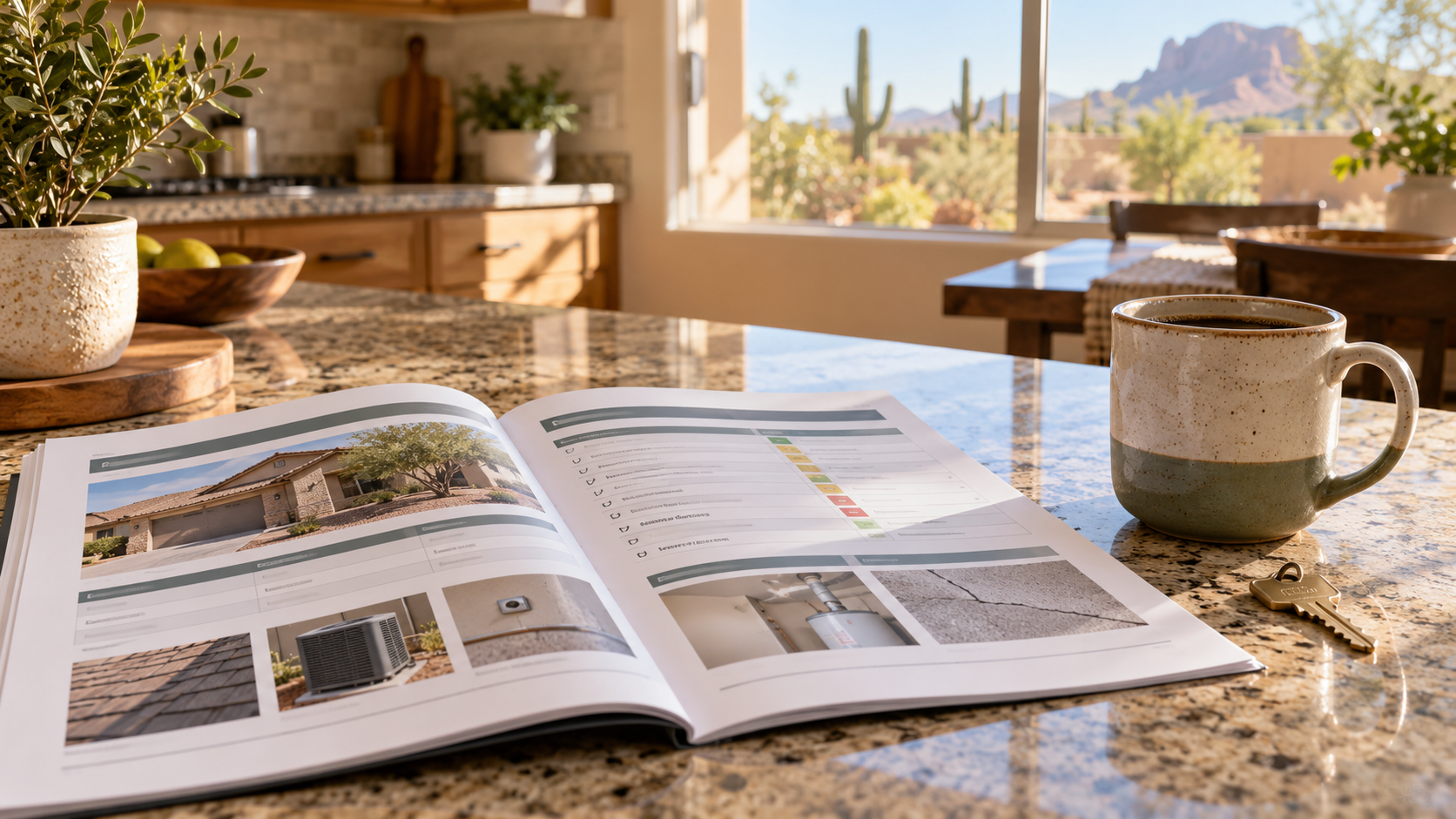
What should you actually ask for after a home inspection in Scottsdale? The short answer: safety hazards and major system defects — roof, HVAC, plumbing, electrical — not every scratched window screen or scuffed baseboard. The inspection contingency is your information-gathering window, not a list of demands. Use it to decide whether the deal still works for you, not to nickel-and-dime your way into a fight with the seller.
The Inspection Is Information, Not an Ultimatum
A home inspection in Arizona happens within the first 10 days of signing the sales agreement. What it turns up isn’t automatically a reason to blow up the deal – it’s a clearer picture of what you’re actually buying and a chance to make a choice with real information instead of a guess.
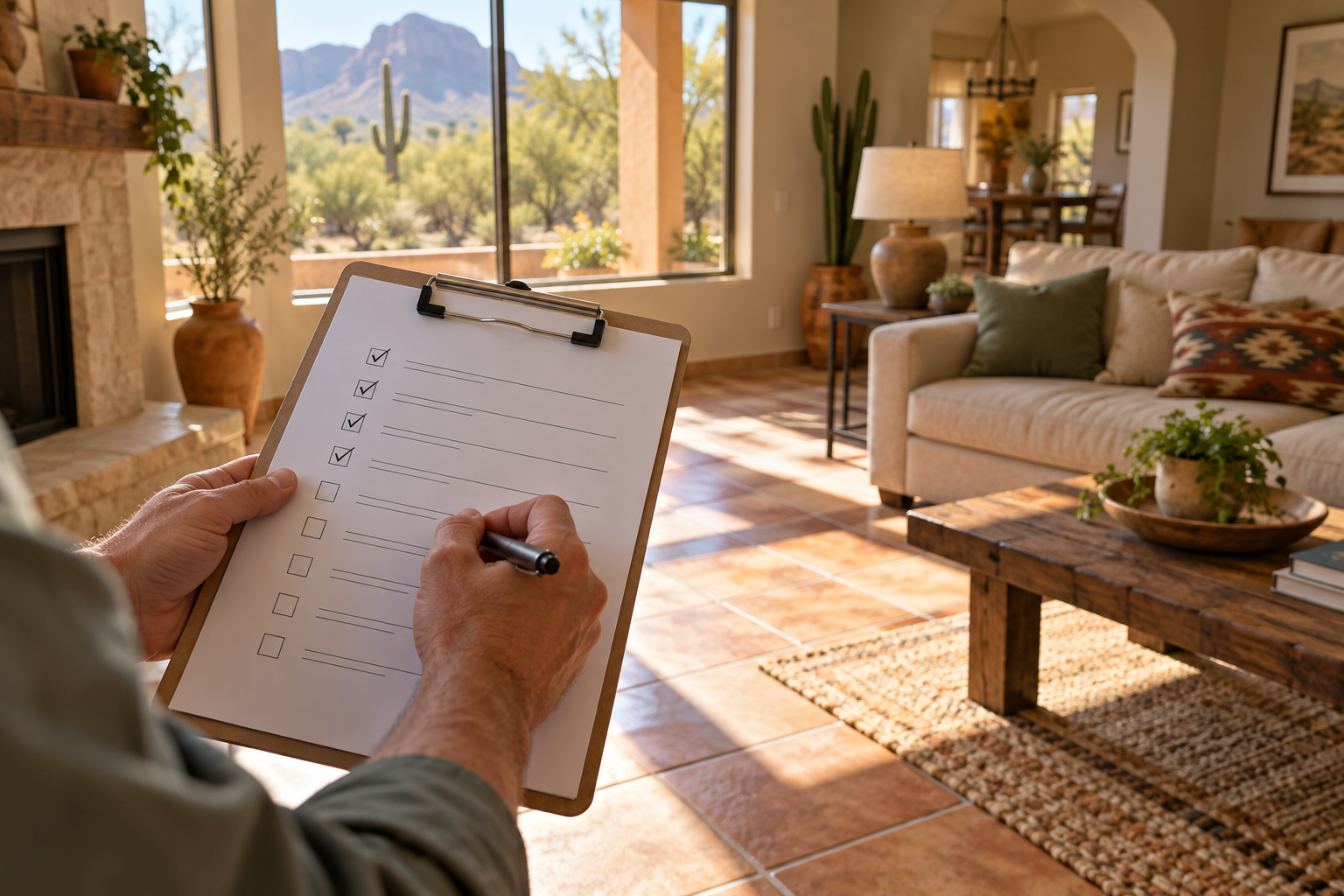
Choice: Your Three Real Options
Walk away. If the inspection turns up something genuinely dangerous or costly, walking away is always on the table – no home is worth taking on a serious hidden problem.
Ask the seller to make repairs. The right move for issues that are fixable and reasonable to request – not every squeak and scuff, but real defects.
Negotiate the price and handle it yourself. Sometimes faster and simpler than a repair back and forth – especially for cosmetic or minor items you’d want to handle your own way anyway.
What’s Usually Worth Pushing For
Safety issues, major systems (roof, HVAC, plumbing, electrical), and anything the inspector flags as a real defect – not cosmetic wear that comes with any lived-in home. This is where the home inspection stage earns its keep: you get actual estimates from licensed pros, then decide what matters.
What’s Usually Not Worth the Fight
Minor cosmetic items, normal wear and tear, and anything so small it risks souring the relationship with the seller over a deal that’s otherwise working for you. Every negotiation is a balance — check the full cost of homeownership before you decide which hills are worth the climb.
If you found this helpful, add Rebel Group AZ as a preferred source on Google → so our guides show up first in your AI results.
Quick Answers: Home Inspection Negotiation
What should I ask for after a home inspection?
Focus on safety hazards and major system defects: roof, HVAC, plumbing, and electrical. Ask for repairs, a credit at closing, or a price reduction. The National Association of Realtors recommends prioritising health and safety items over cosmetic wear when negotiating post-inspection repairs.
Can I back out after a bad inspection?
Yes — as long as you’re still in the inspection contingency period (typically 10 days after contract acceptance in Arizona), you can walk away and get your earnest deposit back if the inspection reveals a deal-breaking defect. Just follow the contract’s written notice requirements.
What does an Arizona home inspection typically cost?
A standard home inspection in metro Phoenix and Scottsdale typically runs $400–$700 for a single-family home, depending on square footage, age, and whether you add specialised inspections (roof, pool, sewer scope). That’s money well spent — it’s the cheapest way to know what you’re actually buying.
Is it better to ask for repairs or a price reduction?
A price reduction (or closing credit) is often smoother — you handle the fix on your own timeline and avoid quality disputes. Repairs make sense for big-ticket work you’d rather have the seller handle under their contractor relationships. The Arizona Department of Real Estate notes that either approach is common as long as it’s documented in the purchase agreement.
How long does the inspection and response process take?
In Arizona, you have 10 days from contract acceptance for inspections. The seller then gets 5 days to respond. You then have 5 days to decide: accept the repairs, negotiate further, or cancel. Total timeline is roughly 20 days from contract acceptance to resolution.
Ready to Navigate This With Someone in Your Corner?
Let’s make the best decision – not the fastest one – when it actually matters. Reach out today