
Pros and Cons of Golf Course Homes Scottsdale Buyers Should Know
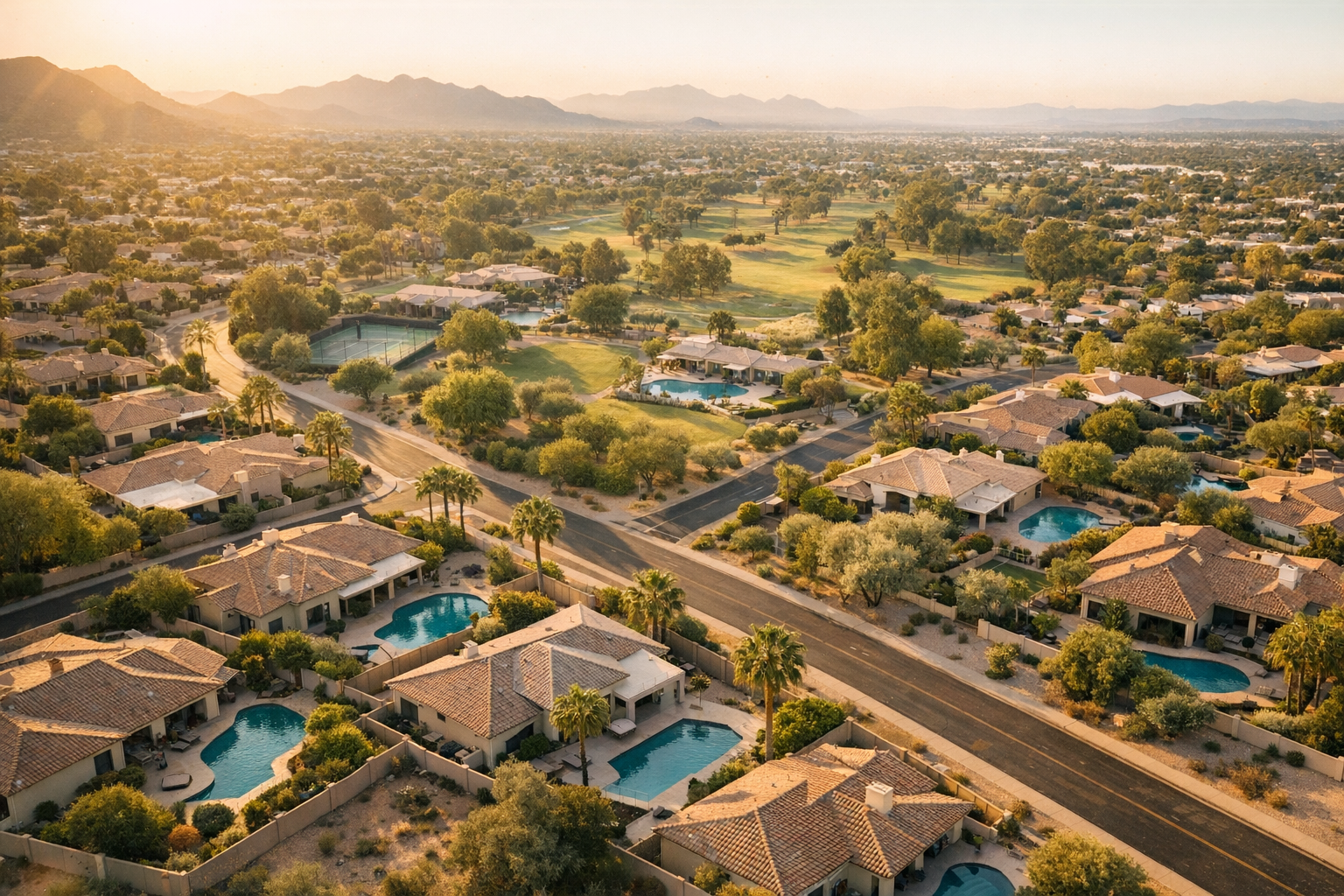
There is a distinct allure to living in Scottsdale. The contrast between the rugged Sonoran Desert and the manicured emerald greens of a championship golf course creates a visual that defines luxury living in Arizona. For many of our clients at Farrell Hogenauer, owning a home directly on the fairway represents the ultimate realization of the Arizona dream. You get expansive views, manicured surroundings, and a sense of openness that is hard to find in standard subdivisions.
However, buying a home on a golf course involves more than just admiring the view. It requires a careful evaluation of logistics, privacy, and lifestyle factors. In our experience helping buyers secure properties across Scottsdale, we have found that the dream of golf course living comes with a unique set of realities. Some buyers find it to be paradise, while others realize too late that the trade-offs do not match their lifestyle preferences.
This guide provides a thorough look at the pros and cons of golf course homes Scottsdale offers. We will use our years of field experience to help you decide if life on the links aligns with your goals for 2026.
The Major Advantages Of Golf Course Living
Most buyers start their search with a focus on the benefits. This is understandable because the advantages of these lots are visually stunning and financially tangible. When you purchase a home in communities like Silverleaf, Desert Mountain, or Gainey Ranch, you are buying into a specific atmosphere.
Guaranteed Open Space And Protected Views
One of the primary reasons our clients choose golf course lots is the view corridor. In a standard neighborhood, your rear view might consist of a block wall and the second story of a neighbor’s house. On the fairway, your backyard visually extends for hundreds of yards. This “borrowed landscape” makes even smaller lots feel expansive.
We have found that this sense of space is particularly valuable in Scottsdale. The desert density has increased over the years. A golf course lot guarantees that no one will build a structure directly behind your fence line. You own your small parcel, but you visually possess the entire hole. For homeowners who value open horizons and sunsets without obstruction, this is a major selling point.
Property Value Stability In Golf Communities
Real estate generally follows the rule of supply and demand, and golf course frontage is a finite resource. There are only so many lots that can border the fairway. In our analysis of market trends over the last decade, homes with premium golf course views typically command a higher price per square foot compared to interior lots within the same subdivision.
This premium holds up well during market fluctuations. The scarcity of “view lots” provides a buffer. When we list homes for sellers in established communities like McCormick Ranch or DC Ranch, the properties backing the course often see faster appreciation and shorter days on market. Future buyers are often willing to pay extra for that guaranteed separation from rear neighbors.
Immaculate Surroundings And Community Standards
Living on a golf course means your “backyard neighbor” is a team of professional groundskeepers. The course management works tirelessly to ensure the grass is green, the trees are trimmed, and the sand traps are raked. You get the benefit of a park-like setting without doing the yard work yourself.
Furthermore, golf course communities usually have robust Homeowners Associations (HOAs). While some buyers find HOAs restrictive, they play a vital role in protecting your investment. They ensure that all homes along the course maintain a high standard of appearance. This consistency protects property values and ensures the neighborhood retains its luxury appeal.
The Potential Drawbacks To Consider
At Farrell Hogenauer, we believe in total transparency. We would not be doing our job if we did not outline the potential downsides. We have helped clients who initially thought they wanted a golf course home, only to change their minds after we walked them through the practical realities of daily life on the fairway.
The Risk Of Errant Golf Balls
This is the most common concern we hear, and it is a valid one. If your home is located in a landing zone (the area where a drive typically lands), your property is a target. We have seen homes with protective screens over every window, which can obstruct the very views you paid a premium for.
Golf balls can do significant damage. They can break windows, dent stucco, damage roof tiles, and shatter patio furniture. Beyond the property damage, there is a safety element. If you enjoy sitting on your patio in the afternoon, the threat of an incoming projectile can make it difficult to relax. Insurance is another factor to consider. Some carriers may have specific exclusions or higher deductibles for glass breakage in these high-risk zones.
Understanding The Privacy Trade-Offs
Living on a golf course is often described as living in a fishbowl. While you do not have a neighbor directly behind you, you do have a steady stream of golfers passing by your backyard every day. Depending on the popularity of the course, this could mean hundreds of people looking into your patio, kitchen, or living room.
We advise our clients to consider the elevation of the lot. If your lot sits higher than the course, you retain some privacy while keeping the view. If your lot is level with or below the fairway, golfers can see right in. We recently worked with a buyer in Terravita who loved a home until they realized the cart path was only ten feet from the master bedroom window. They ultimately decided that the lack of privacy was a deal-breaker.
Maintenance Noise And Early Starts
Golf courses must be maintained, and that maintenance happens early. In the summer months in Arizona, grounds crews often start mowing and blowing before sunrise to beat the heat. If you are a light sleeper, the sound of heavy industrial mowers at 5:00 AM might be a significant disturbance.
It is not just the mowers. There is also the sound of golfers. Voices carry across open grass. You will hear conversations, music from carts, and the occasional shout of frustration or celebration. If you value absolute silence, a golf course lot might present challenges.
Choosing The Right Lot Location Is Critical
Not all golf course lots are created equal. The specific location of the home relative to the hole determines your experience. In our experience, understanding the geometry of the game is essential for selecting a safe and quiet lot.
The Safety Of The Tee Box
Homes located behind or directly to the side of the tee box are generally the safest. Golfers are hitting away from your property. You are unlikely to deal with errant balls unless someone hits a shot that goes almost 90 degrees sideways, which is rare.
However, the trade-off here is noise. The tee box is where golfers congregate, chat while waiting for the group ahead, and tee off. You will hear the “thwack” of the driver and plenty of conversation. We often recommend these lots to clients who prioritize safety over absolute silence.
The Risk Of The Landing Zone
This is the area roughly 200 to 280 yards from the tee box. This is where most drives land. If your home is on the right side of the fairway in this zone, you are in the “slice zone.” Since most amateur golfers are right-handed and tend to slice (curve the ball to the right), homes on the right side take the most hits.
We exercise extreme caution when showing homes in these zones. Unless the home is set far back from the fairway or protected by significant vegetation, the risk of damage is real. We always encourage clients to look for pockmarks on the stucco or dents in the garage door as evidence of heavy ball traffic.
The Activity Near The Green
Homes near the green (the putting area) offer a different dynamic. By the time golfers reach the green, they are using clubs that do not hit the ball as hard, so the risk of window-shattering damage is lower. However, the green is where the game slows down. Golfers spend more time here putting and retrieving balls. This means you will have people lingering behind your home for longer periods compared to the fairway.
We find that homes near the green often command high premiums because they offer a nice balance of view and relative safety, provided you are not directly behind the hole where an overshot approach might land.
Client Success Story: Finding Balance In Troon North
We recently worked with a couple looking to purchase a vacation home in Troon North. They were adamant about having a golf course view but were terrified of broken windows, as they had friends who lived in a “landing zone” house and dealt with constant repairs.
They found a stunning property that seemed perfect, but we noticed it was located on the right side of a long par-4 fairway, exactly where sliced drives would land. We advised them to pause and spend some time in the backyard during peak play hours. Within 20 minutes, they watched two balls land in the desert landscaping just yards from the patio. It was clear that the anxiety of sitting outside would ruin their enjoyment of the home.
We pivoted the search and identified a property situated behind the tee box of a par-3 hole. The view was just as spectacular, looking down the fairway toward the mountains. Because they were behind the hitters, the risk of golf balls was virtually zero. They purchased the home and have reported enjoying their patio worry-free for the last two years. This example highlights why expert guidance is crucial when navigating these specific niche properties.
The Impact Of Cart Paths On Daily Life
An often-overlooked detail is the location of the cart path. The cart path is the concrete road that golf carts travel on. Its proximity to your home matters immensely.
If the cart path is on your side of the fairway, you will have carts driving by all day. This creates noise and reduces privacy. If the cart path is on the opposite side of the fairway, you gain a significant buffer. The expanse of grass acts as a moat between you and the traffic.
When we tour homes with clients, we always check the cart path location. We also check for “cart path signs” near the property. If there is a sign that says “Carts Return to Path” near your back fence, you can expect increased traffic and engine noise as carts accelerate to get back on the pavement.
Architectural Restrictions To Consider
Living on the fairway often comes with stricter architectural guidelines than interior lots. The HOA and the golf course management want to maintain a uniform look for the golfers. This often means you face restrictions on:
- Fencing: You may be required to use “view fencing” (wrought iron) rather than block walls. This preserves the view but limits privacy.
- Landscaping: There may be limits on planting tall hedges or trees that could block the view of the course or interfere with play.
- Exterior Changes: Any addition to your home, such as a pergola or pool, will likely face strict scrutiny to ensure it does not encroach on the course setbacks or negatively impact the visual aesthetic of the hole.
We help our clients review the CC&Rs (Covenants, Conditions, and Restrictions) specifically related to golf course frontage before making an offer. It is vital to know exactly what you can and cannot do with your property.
Is A Golf Course Home Right For You?
Deciding to live on a golf course in Scottsdale is a lifestyle choice that weighs heavily on your personal tolerance for activity versus your desire for beauty. The pros are undeniable: protected views, open space, and strong resale value. The cons are practical: noise, privacy loss, and the potential for golf ball damage.
As licensed real estate professionals in Arizona, we believe the key is specificity. You cannot generalize “golf course living” because a home behind a tee box in DC Ranch offers a completely different experience than a home in the landing zone at Grayhawk.
If you are considering a move to one of Scottsdale’s premier golf communities, you need a partner who understands the nuances of the game and the real estate market. At Farrell Hogenauer, we know which lots offer the sanctuary you are looking for and which ones might be more trouble than they are worth.
Contact the Rebel Group today. Let us help you find a home that offers the perfect view without the risk. We are ready to help you make your move in 2026.