

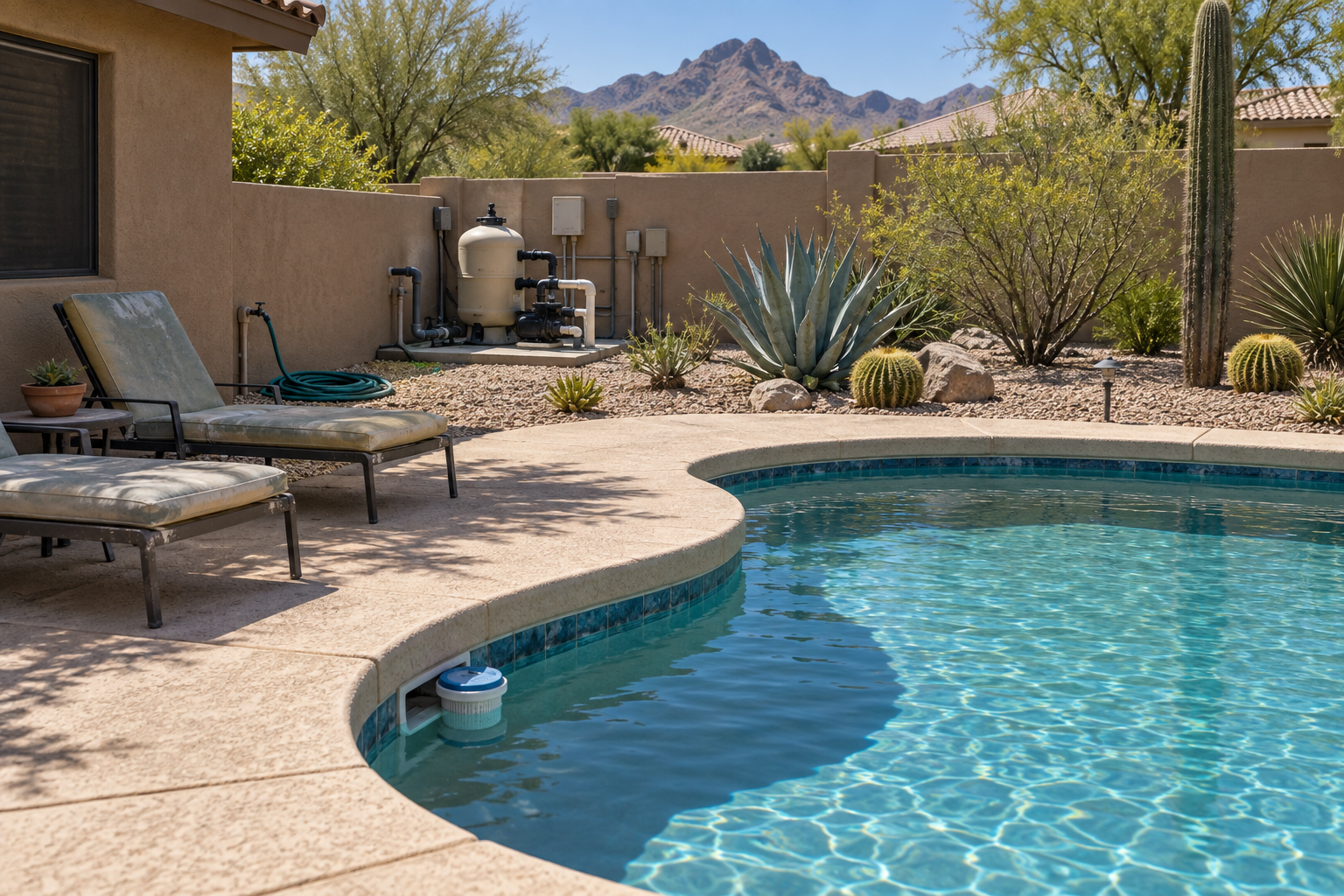
What does a Scottsdale pool actually cost to own and run? Between routine service ($120+/month for weekly cleaning and chemicals), electricity to run the pump and heater, water to refill, and eventual equipment replacement (pumps, filters, heaters don’t last forever), a pool can easily add $2,000–$5,000+ per year to your household operating costs. And that’s before you answer the real question: will you actually swim in it enough to make that worthwhile?
The listing photo shows a pool. Your brain adds a float, a drink and a weekend filled with pool days and Backyard BBQ’s.
Owning the pool takes a little more planning. In Scottsdale, routine service is only part of the cost and year-round access doesn’t mean you’ll want to swim year-round. Winter comfort depends on the water temperature you want, the weather and whether you’re willing to pay to heat that particular pool.
Start with a service quote .. not an internet average
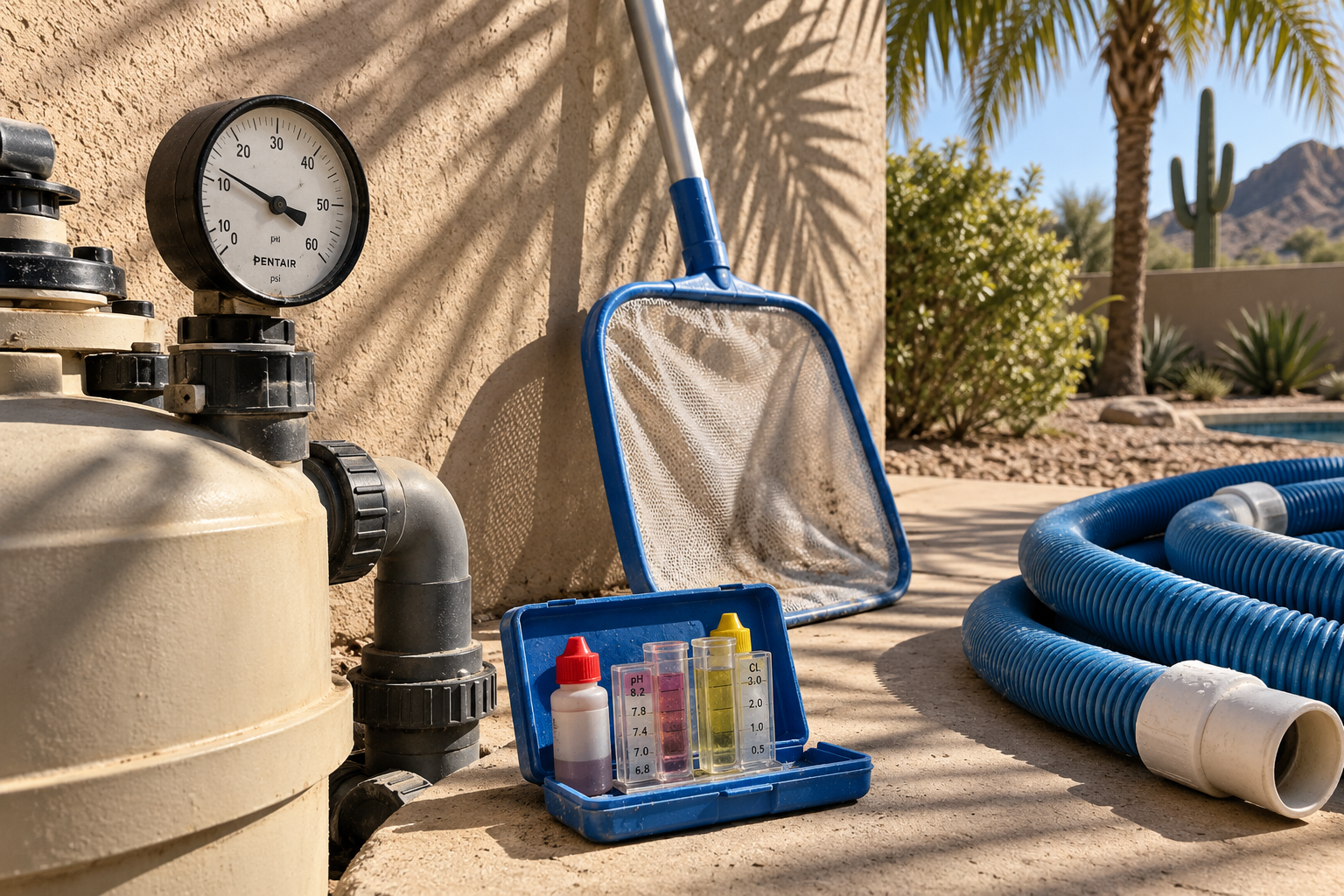
You can always maintain your pool yourself .. but many choose to hire pool companies to do weekly service visits for pool maintenance. Scottsdale weekly cleaning services start around $120 per month and Pool companies typically do weekly water testing, chemical balancing and cleaning tasks. In addition to weekly pool maintenance … there are other costs involved in maintaining a pool .. so honestly, The costs don’t all arrive on the same invoice
| Budget item | What to request |
|---|---|
| Routine service | Written scope, visit frequency, chemical inclusions and exclusions |
| Electricity and any heating fuel | Seller’s bills, equipment details and an estimate based on your use |
| Water | Actual bills and an explanation of filling, leaks or unusual use |
| Repairs | Equipment inspection, service history and quotes for identified problems |
| Larger future work | Assessment of the pool surface and other components, with a reserve plan |
During a home inspection, ask about filters, salt-system components if present, automation and the heater. Find out what works now, what needs attention and what hasn’t been used enough for the seller to know.
A separate pool inspection can help answer questions a general walk-through won’t. Clear water is nice to look at. It is not an equipment report.
If you’re thinking of doing the upkeep yourself, get a realistic explanation of the testing and maintenance routine first. You would be taking on the work, not making the need for it disappear. For a broader view of what homeownership in Scottsdale really costs beyond the mortgage, read our homeownership reality guide.
Will you swim in winter?
Maybe. Don’t buy on the assumption that “Arizona pool” means comfortable water every month.
Decide how you want to use it. Occasional weekends? Morning laps? Visits from people who expect to swim regardless of the date? Those plans can lead to different heating decisions and bills.
If year-round swimming matters, you need a pool heater. Come September .. the pool water starts cooling .. and from October – April .. you might need a wet suit to dive in. That said, have a pool professional assess if there is an existing heater, how its running and the pool’s exposure to the sun and your preferred water temperature. Request a heating estimate for that specific setup, including the assumptions behind it. Ask about a suitable cover and how using one would affect the estimate. Don’t use a summer showing to judge winter swimming comfort.
If you prefer seasonal swimming, ask what the maintenance plan should look like during the months you don’t use it. An idle pool shouldn’t simply fall off your household to-do list.
Be honest about the life around the pool
Picture an ordinary week when you’re busy. Would you use it enough to want the responsibility? Would a shared pool suit you better? If you’re considering a master planned community with a neighborhood pool .. check the pool hours, heating policy, fees and rules rather than assuming it works like your own backyard.
With any property, have barriers and other safety features reviewed. A beautiful pool doesn’t answer those questions for you.
The home-inspection stage is a good time to collect the reports and quotes while you still have decisions to make.
Quick Answers: Scottsdale Pool Costs
How much does pool maintenance cost in Scottsdale per month?
Weekly pool service in Scottsdale starts around $120 per month for basic cleaning, chemical balancing, and water testing. Comprehensive packages that include equipment checks and filter cleaning typically run $150–$250 per month. DIY maintenance cuts that to about $40–$60 per month in chemicals but takes 2–4 hours of your time weekly.
Can I swim in a Scottsdale pool year-round without heating?
Not comfortably. Without a heater, Scottsdale pool water drops to the mid-50s to low-60s °F from November through March — that’s wetsuit territory, not casual swimming. If year-round use matters to you, budget for a gas or heat-pump heater and the fuel to run it. The U.S. Department of Energy notes that a pool cover can cut heating costs by 50–70% and is the single best investment for winter swimming.
How long do pool equipment and surfaces last in Arizona?
Pool pumps last 8–12 years, heaters 5–10 years, and plaster/pebble surfaces 10–15 years in Arizona’s climate. Salt systems (if present) need cell replacement every 3–5 years. Ask the seller for service records and hire a licensed pool inspector during your due diligence to assess equipment age and remaining life.
What does it cost to heat a pool in Scottsdale in winter?
Gas pool heating in Scottsdale can add $300–$800 per month to your utility bill during winter months, depending on pool size, desired temperature, and whether you use a cover. Electric heat-pump systems are more efficient but have higher upfront costs. Always request the seller’s actual heating bills before you buy — not an estimate from their neighbor.
Should I get a separate pool inspection during due diligence?
Yes — a general home inspector will check basic pool safety and visible equipment, but a dedicated pool inspector will test the pump, filter, heater, salt cell (if present), automation system, and pool surface integrity. Expect to pay $250–$450 for a standalone pool inspection. The National Association of Realtors recommends getting separate bids for any recommended repairs while you’re still in the inspection period.
Send Farrell the listing and how you hope to use the pool. Let’s make sure the budget includes the part of pool ownership that never appears in the listing photo.